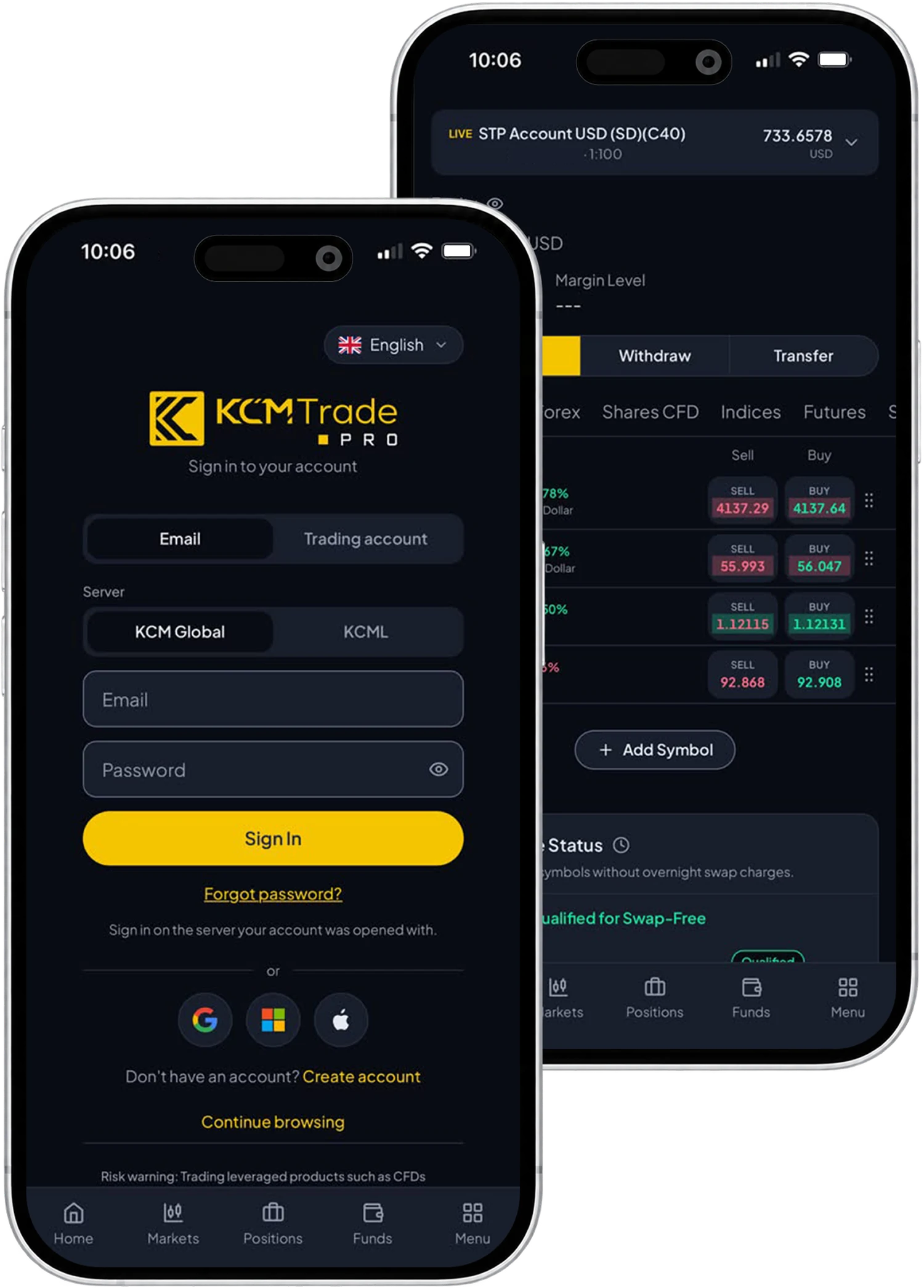


Liquidity affects the prices traders see, the volume available at each price and how orders are filled. At KCM Trade, we recognise that liquidity plays an important role in pricing, execution conditions and trading risks. In this guide, we explain the key concepts and how we approach liquidity and order execution at KCM Trade.
What is liquidity?
Liquidity describes how easily an asset can be bought or sold without significantly moving its price. A liquid market has plenty of buying and selling interest, so orders can usually be filled close to the quoted price. In a less liquid market, fewer orders sit at each price, and execution can be harder or costlier.
The foreign exchange (forex) market is decentralized and traded over the counter (OTC). There is no single order book covering all participants, so prices and available volume can differ between liquidity sources and venues.
Liquidity depends on the instrument, the trading session, the order size and market conditions. Major pairs such as EUR/USD are usually deep during active sessions, while less-traded pairs tend to have fewer available prices and wider spreads. It is also not just a matter of how much an instrument trades: it concerns the volume available at particular prices and how far the price may move when an order is filled.
What is a liquidity provider?
A liquidity provider (LP) is an institution or market participant that quotes buy and sell prices and contributes trading volume. KCM Trade doesn’t rely on a single LP; we connect to a combination of different providers, and that combination shapes the prices, depth, and execution clients experience.
To explain how different sources contribute to liquidity, let's look at the main types of providers and the roles they can play in the market.
Banks and financial institutions quote prices and facilitate transactions for institutional clients and counterparties. They are typically valued for depth, meaning the ability to handle larger order sizes, especially in major currency pairs. Examples of firms in this category include Barclays, JPMorgan, UBS, Deutsche Bank, Goldman Sachs, HSBC and Nomura.
Non-bank market makers use specialized pricing technology to quote prices across instruments. Their automated systems update quotes very quickly, which often contributes to competitive pricing at the top of the book. Examples include XTX Markets, Citadel Securities, Jump Trading, Flow Traders and Tower Research.
Prime-of-prime (PoP) firms give brokers access to institutional liquidity they might not reach directly, for example because of credit or volume requirements. Examples include Saxo Bank, ISPrime, CMC Markets, ADMIS and Finalto.
ECNs and electronic trading venues let participants post and match buy and sell orders on a shared electronic platform, often anonymously. They bring many participants' prices together in one place. Examples include LMAX and 360T.
Why the combination matters
Each type of provider tends to contribute something different, such as depth from banks or fast, tight quotes from non-bank market makers. At KCM Trade, we combine different liquidity sources to support our pricing and execution arrangements. Our liquidity network reflects our business model, counterparties, and trading infrastructure.
We don’t set prices ourselves. We compile quotes from one or more sources into a single feed, and when we use several sources, the platform can build the displayed bid and ask from the best available inputs, so the platform's spread may differ from any single source. When volatility is high, or volume at the best price runs out, orders can be routed to deeper tiers. Our arrangements change over time, and the use of multiple sources does not guarantee a particular price or fill.
Why liquidity matters to our clients
Understanding liquidity can help our clients interpret the pricing and execution conditions they encounter when trading with us. Several factors are particularly important.
Spreads
The spread is the difference between the bid (sell) and ask (buy) price. Deeper liquidity can support narrower spreads, but spreads also depend on volatility, the instrument, the broker's pricing and any commissions. They can widen in thin or volatile markets, so a "minimum" spread should not be assumed to be available at all times.
Execution and slippage
Slippage is the difference between the expected price and the price at which an order is filled. It can be positive or negative. Deeper liquidity can help absorb orders, but it cannot remove slippage or guarantee a specific price.
Market depth
Depth shows the volume available at different price levels beyond the best bid and ask. A platform may display a competitive price with only limited volume behind it, so a larger order may need volume from further levels, changing the average fill price. Displayed depth may represent only part of the liquidity a broker can access.
Market impact
When an order is large relative to the volume available at the quoted price, it may be filled across several price levels. This can result in an average execution price that differs from the initial quote. Understanding this possibility is particularly important when trading larger positions.
What affects liquidity?
Several factors influence liquidity and the execution conditions our clients experience.
- Sessions: liquidity in major pairs often rises when major financial centres overlap.
- News and events: interest-rate decisions, inflation and jobs data, and geopolitical events can move prices quickly and make liquidity less stable.
- Instrument: majors generally trade more actively than minor or exotic pairs.
- Order size: a small order may fill at the best price, while a large one may need deeper levels.
- Uncertainty: participants may change their quotes or volumes quickly, even in normally active markets.
How can liquidity be assessed?
No single measure captures liquidity. Useful indicators include the bid–ask spread, market depth, execution speed, fill ratio, slippage, and price stability under large orders. They should be read together: a narrow spread does not show that much volume is available at that price, and fast execution does not guarantee the final price matches the quote.
For more information about our liquidity arrangements, clients can contact our customer support team
KCM Trade at a glance
Here are some key details about our business and trading services.
- Background: We began in 2016 providing liquidity brokerage services to institutional clients, and extended our services to retail clients in 2019 with ECN accounts.
- Scale: we serve about 1 million client accounts, have executed about 96 million orders, and work with more than 80 institutional clients.
- Regulation: The services on this website are provided by Kohle Capital Markets Limited, regulated by the Mauritius Financial Services Commission (FSC), regulatory number C117022600.
- Client funds: held in segregated accounts with major banks, separate from our operating funds. Accounts holding client funds are audited annually by BDO.
- Trading tools: MetaTrader 5, the KCM Trade WebTerminal and our mobile app, and FIX API connectivity for professional users.
How we handle liquidity and order execution
Liquidity tiers
As explained in our Help Centre, when volatility is high or liquidity at the initial level is insufficient, our system can route orders to Tier 2 or deeper liquidity tiers to help fill them (read the Help Centre article). In this context, "tiers" refers to successive levels of available price and volume. It should not be confused with the industry use of "Tier 1" and "Tier 2" to classify types of liquidity provider.
As a result, different parts of one order may fill at different prices, and the final execution price can differ from the price first displayed.
Why a chart price can differ from the execution price
On MetaTrader platforms, charts display the bid price by default, while a buy order is generally filled at the prevailing ask price, so the spread alone can explain a difference. Our Help Centre also explains that charts show the best bid and ask from Tier 1 liquidity, while actual execution may involve deeper tiers, so a fill can fall outside the range shown on the chart. A chart price is a reference, not a guarantee of the fill price.
Execution speed and market depth
We state an order execution time of 0.25 seconds and offer up to five levels of market depth. Speed describes how fast an order is processed; depth describes the volume and prices available across levels. Neither guarantees a particular price, and actual conditions vary with instrument, order size, market conditions and account type.
Large orders
Our public risk disclosure warns of additional price risk on forex and CFD orders of 4 lots or more. When liquidity is limited, such an order may fill at deeper price levels, giving a significant difference between the expected and actual price. The disclosure also states that we prioritise execution speed over price for these orders, so a large order should not be expected to fill entirely at the first displayed price. Clients should consider order size and read the Order Execution Policy and Risk Disclosure before trading.
Frequently asked questions
What is a liquidity provider? An institution or market participant, such as a bank or non-bank market maker, that quotes buy and sell prices and contributes trading volume.
What is the difference between liquidity and market depth? Liquidity is how readily an asset can be traded without moving its price. Depth is the volume available at different price levels, and it may not show all the liquidity a broker can access.
Does higher liquidity guarantee faster execution or lower costs? No. Speed, spreads and total cost also depend on commissions, fees, volatility, order size and execution arrangements.
Why might my fill differ from the price on my chart? Charts show the bid by default, buy orders fill at the ask, and the fill may involve deeper liquidity than the chart shows.
What happens with a large order? If the requested volume exceeds what is available at one price, the order may fill across several levels. See our risk disclosure on orders of 4 lots or more.
Can liquidity change during the day? Yes, with session activity, news and shifts in participation, which can affect spreads, depth and fill prices.
Where can I find more information? Our Help Centre, trading information, account conditions, Order Execution Policy and Risk Disclosure pages on this website.
Disclaimer
This article is for general educational purposes only. It is not investment advice or a recommendation to trade. Figures and conditions may vary by instrument, account type and market conditions, and should be read with the applicable account terms and official disclosures. The services on this website are provided by Kohle Capital Markets Limited, regulated by the Mauritius Financial Services Commission (FSC), regulatory number C117022600.
Risk warning
Forex and CFDs are leveraged products that carry a significant risk of loss and may not be suitable for all investors. Leverage can amplify both profits and losses. Liquidity can change rapidly, leading to wider spreads, slippage and unexpected execution prices. Market depth and execution speed do not remove trading risk. Only trade with money you can afford to lose.