


Surging US Treasury Yields Reshape the Global Asset Anchor
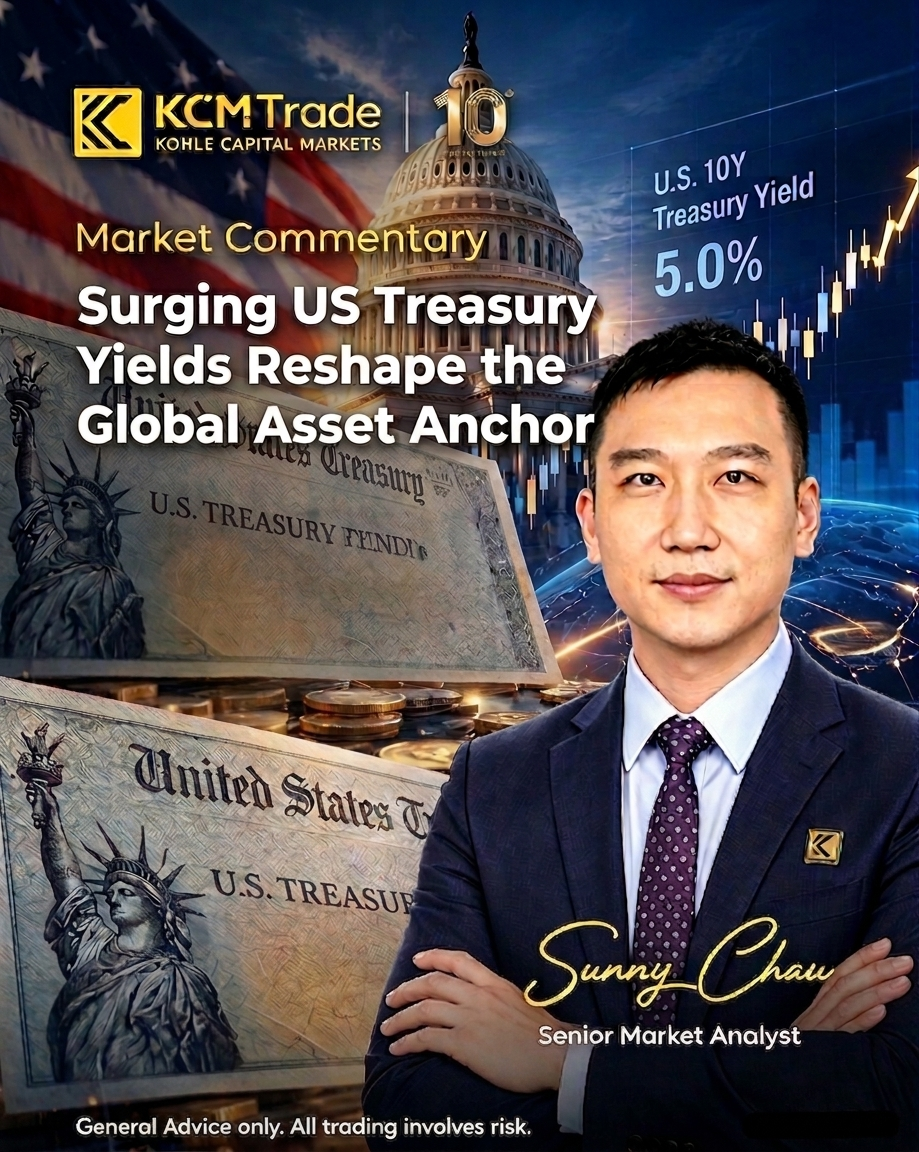
Under the dual impact of surging US Treasury yields and recurring tensions in the Middle East, global financial markets are exhibiting a pattern where US stocks are under pressure, the US dollar remains firm, crude oil spiked before retreating, and gold was hit by heavy selling. The storm in US Treasury yields has become the core pricing anchor across all major asset classes, while the heightened inflation expectations reinforced by high oil prices have further fueled market bets that the Federal Reserve will continue raising interest rates.

Yesterday, all three major US stock indices closed lower. Except for Nvidia, which bucked the trend to close higher after announcing an additional $150 billion stock buyback, AI-related stocks bore the brunt of the sell-off. The core driver putting pressure on US equities was the continuous surge in Treasury yields. The 10-year US Treasury yield rose by approximately 5 to 6 basis points to the 5.21%–5.24% range, remaining at a two-decade high. Against the backdrop of risk-free interest rates breaching 5%, the discounted present value of future cash flows for high-growth tech stocks has been systematically compressed, becoming the primary cause of the decline in stock indices.
In FX markets, the US Dollar Index maintained an overall strong position, trading near 101.10 level. The logic behind the dollar's strength is directly aligned with the rise in Treasury yields. High oil prices elevated inflation expectations, and the Fed officials delivered a barrage of hawkish signals, allowing the yield-differential advantage of US dollar assets to persist. The Cleveland Fed President Beth Hammack stated that strengthening economic growth expectations, concerns over government debt, and expectations of further rate hikes have jointly driven long-term Treasury yields upward. The Federal Reserve Governor Michael Barr also noted that risks to achieving the 2% inflation target are rising, and further rate hikes may be needed to ensure inflation returns to the target.
International crude oil prices experienced a sharp rise followed by a retreat. Intraday volatility was driven by the back-and-forth developments in the Middle East situation. Trump rejected an Iranian proposal to reopen the Strait of Hormuz for seven days, temporarily driving oil prices sharply higher. However, the news that Saudi Arabia's East-West pipeline resumed operations after a drone attack became the key factor curbing sustained upside momentum. According to a report, the pipeline has restored approximately 3.5 million barrels per day of crude oil flow, marking Saudi Arabia's regained capacity to bypass the Strait of Hormuz for key exports. Notably, despite Trump rejecting the Iranian offer, the White House officials revealed he remains open to easing sanctions on Iran regarding the nuclear issue. These contradictory signals alleviated extreme market fears over supply disruptions, preventing oil prices from maintaining intraday highs. Nevertheless, transport security risks in the Strait of Hormuz persist, and supply-side uncertainties have not completely dissipated.
The precious metal market suffered an aggressive sell-off, with spot gold plunging nearly 4% and dropping to around $4,110 per ounce at one point. The primary driver behind the gold collapse was the surge in US Treasury yields; with Treasuries offering a risk-free return of over 5%, the opportunity cost of holding non-yielding gold has escalated significantly. At the same time, high oil prices reinforced inflation expectations, further boosting bets on the Fed rate hikes. Current market pricing indicates approximately a 65% probability of a 25-basis-point rate hike at the Fed's October meeting, and roughly a 50% chance of a cumulative 50-basis-point hike by December.

The surge in US Treasury yields is reshaping the valuation anchor of global assets. Following the Fed's rate hike in September, a barrage of hawkish signals from multiple officials, combined with a still-resilient US labor market, jointly propelled the 10-year yield upward. This level of interest rates exerts a systematic drag on US stock valuations and poses a direct opportunity-cost shock to gold. Looking ahead, the US PCE inflation data for August due this Wednesday and the Non-Farm Payrolls report for September on Friday will serve as crucial variables for the Fed's rate path. If the data comes in stronger than expected, Treasury yields may climb further, keeping the US stocks and gold under continued pressure.
(Some visual images were created with the assistance of AI technology and are for illustrative purposes only.)




.jpg)
.jpg)
%20(1).jpg)
.jpg)