


Financial management is the strategic planning, allocation, and control of monetary resources within an organization or by an individual. It brings together budgeting, forecasting, investment analysis, and risk management into a single, ongoing discipline aimed at meeting financial goals. Understanding how it works matters because it directly shapes how effectively an organization — or a trader — uses its capital, manages liquidity, and positions itself to take advantage of market opportunities while limiting downside exposure. This article walks through the core concepts behind financial management, the methods used to implement it, the key components of successful financial planning, and where a service like KCM Trade fits into that picture.
Key Takeaways
- Financial management covers the strategic planning, allocation, and control of monetary resources, including budgeting, forecasting, investment analysis, and risk management.
- Core concepts include the time value of money, the risk-return tradeoff, capital structure and cost of capital, and liquidity management.
- Common methods include budgeting, forecasting, ratio analysis, financial modeling, cash flow management, and regular audits.
- The main benefit is more informed decision-making, reduced risk, and better capacity to capitalize on market opportunities.
- The primary risk consideration is the risk-return tradeoff: pursuing higher potential returns generally means accepting higher risk, which is why risk management strategies are built into the process.
What Is Financial Management?
Definition of Financial Management
Financial management is the basis of any successful organization, focusing on strategic planning, allocating, and controlling monetary resources. It involves budgeting, forecasting, investment analysis, and risk management. In practice, this means an organization or individual is constantly making decisions about where money comes from, where it goes, and how to protect it against uncertainty.
Key Characteristics of Financial Management
Several core concepts define how financial management functions:
- Time value of money — a dollar today is worth more than a dollar in the future, because of its potential earning ability. This principle underpins most financial decision-making.
- Risk-return tradeoff — higher potential returns are typically connected with higher risk levels, meaning every investment or funding decision involves weighing reward against exposure.
- Capital structure and cost of capital — determining the optimal mix of debt and equity financing to minimize the cost of funding while maximizing value.
- Liquidity management — ensuring an organization can meet its short-term obligations without compromising longer-term objectives.
Together, these concepts enable organizations to make informed decisions, optimize economic performance, and pursue sustainable growth.
How Does Financial Management Work?
How Financial Management Works
Financial management works through a structured approach that combines planning, analysis, and control. It typically starts with developing comprehensive budgets that outline expected revenues and expenses, which then serve as a guide for decision-making. Regular forecasting is used to predict future monetary conditions so strategies can be adjusted as circumstances change.
From there, financial analysis — including ratio analysis — allows an organization to assess its financial performance by comparing key monetary metrics over time or against industry standards. Financial modeling is used to simulate different scenarios, supporting risk assessment and decision-making. Cash flow management ensures there is enough liquidity to meet obligations while still being able to invest in growth opportunities. Finally, regular audits help safeguard assets and ensure accuracy in financial reporting.
Example of Financial Management in Practice
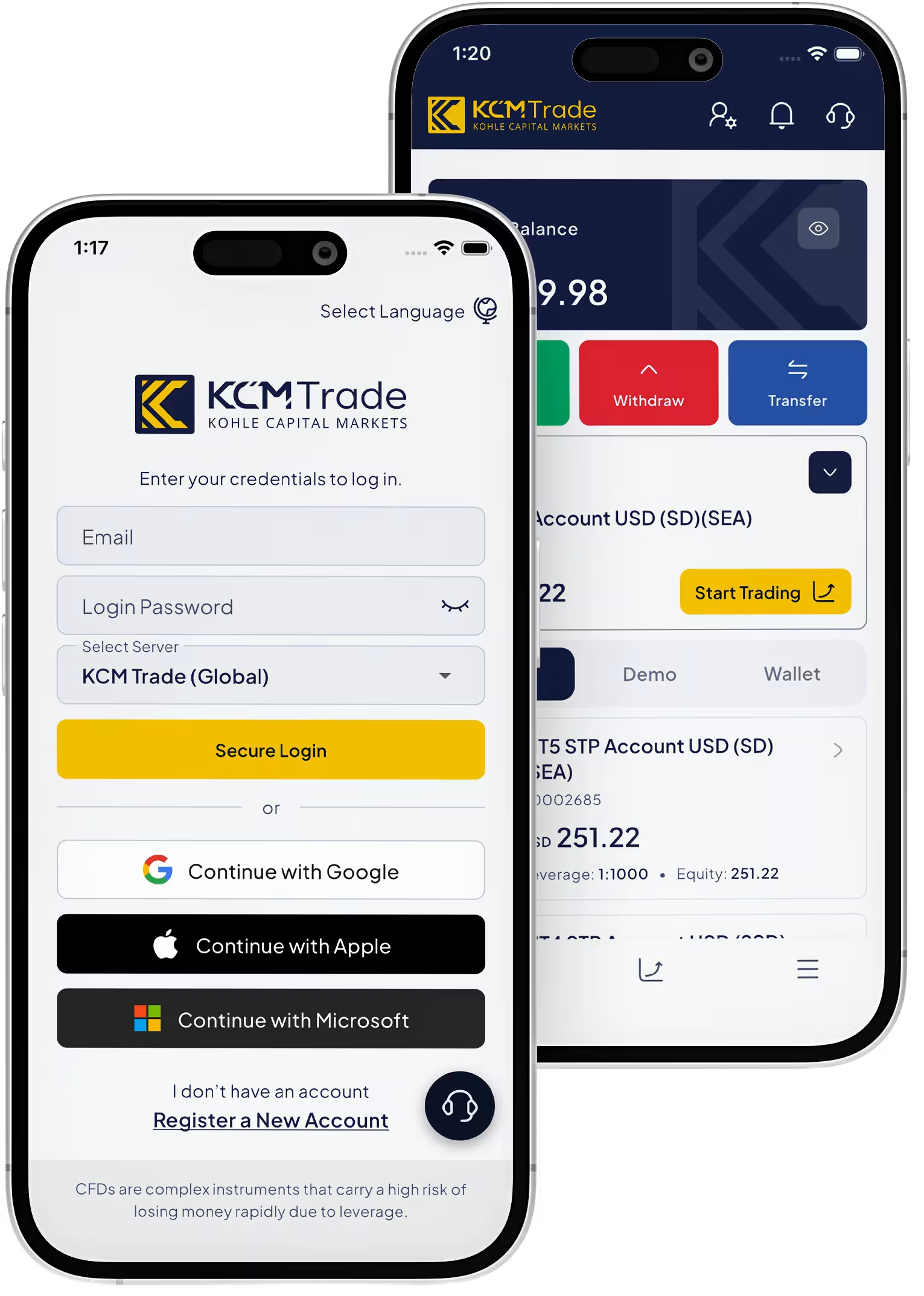
KCM Trade illustrates how this works in a real-world setting. It provides customized cash management solutions designed to meet specific business needs, specializing in budgeting, forecasting, risk management, and investment planning to help clients optimize financial performance and achieve sustainable growth. Its trading services also give Forex traders access to strategic financial advice, market insights, and investment perspectives — an integrated approach that helps clients face economic challenges with more confidence while positioning themselves to take advantage of a dynamic market.
Key Features of Financial Management
Successful financial management and planning tend to share several features:
- Setting clear, measurable monetary goals that provide direction and benchmarks for progress
- Comprehensive budgeting that outlines expected income and expenses to guide resource allocation
- Accurate forecasting of future economic conditions and market trends to allow proactive adjustments
- Risk management strategies designed to protect against unforeseen monetary declines
- Investment planning that puts funds to work in a way consistent with risk tolerance and time horizon
- Regular monitoring of financial performance to catch deviations early and make corrections
- Tax planning that minimizes tax obligations while maintaining regulatory compliance
Benefits of Financial Management
Effective financial management helps organizations and individuals make informed decisions, reduce risk, and capitalize on market opportunities. It supports the ability to meet short-term obligations while continuing to pursue longer-term objectives, and it helps optimize overall economic performance so that growth is sustainable rather than accidental. For traders working with services like KCM Trade, this also means access to strategic advice and market insight that can support more confident decision-making in a changing market environment.
Risks and Limitations
The main risk consideration built into financial management is the risk-return tradeoff: pursuing higher potential returns is generally associated with higher risk, so no financial decision is free of exposure. This is part of why risk management strategies — designed specifically to protect against unforeseen monetary declines — are treated as a core component of financial planning rather than an optional add-on. Managing this tradeoff responsibly, rather than eliminating it, is central to sound financial management.
Who Is Financial Management For?
Financial management applies broadly — to institutions and individuals alike who are looking to maximize their earnings and maintain financial success. It's relevant to businesses managing budgets, forecasts, and cash flow, as well as to individual investors and Forex traders who rely on strategic financial advice and market insight, such as the services offered through KCM Trade, to guide their decisions.
Frequently Asked Questions
What is the difference between financial management and financial planning?
Financial management is the broader discipline of strategically planning, allocating, and controlling monetary resources through budgeting, forecasting, investment analysis, and risk management. Financial planning is the more specific, ongoing process within that discipline focused on setting and achieving monetary goals in a changing economic environment.
What methods are used to implement financial management?
Common methods include building comprehensive budgets, conducting regular forecasting, using ratio analysis to compare performance over time or against industry standards, applying financial modeling to simulate scenarios for risk assessment, managing cash flow to maintain liquidity, and performing regular audits to safeguard assets and confirm reporting accuracy.
How does KCM Trade support financial management for traders?
KCM Trade offers customized cash management solutions covering budgeting, forecasting, risk management, and investment planning, along with trading services that give Forex traders strategic financial advice and access to market insights — helping clients manage economic challenges and pursue market opportunities with an integrated approach.
Conclusion
Financial management is the strategic process of planning, allocating, and controlling monetary resources — built on core concepts like the time value of money, the risk-return tradeoff, and capital structure, and carried out through budgeting, forecasting, analysis, and risk management. Its value lies in helping institutions and individuals make informed decisions, manage the inherent tradeoff between risk and return, and position themselves to capitalize on opportunities in a changing market. Whether applied within a business or through trading-focused support like KCM Trade, the underlying goal remains the same: use monetary resources effectively enough to sustain growth over time.