

Will Gold break out amid policy gridlock as the US Midterm Elections approach?
The gold market exhibited a classic 'bottom rebound' trend this week, as bulls and bears clashed intensely around the psychological threshold of $4,000 per ounce. Although gold price faced downward pressure early in the week, hitting a more than three-month low, gold price recovered part of some losses midweek as oil prices pulled back and policy uncertainty loomed due to the approaching US midterm elections. Currently, gold price is fluctuating around $4,050 per ounce, with market attention shifting toward the upcoming Federal Reserve policy meeting for signals regarding the future trajectory of interest rates.

Previously, disruptions in the Middle East drove crude oil prices to high levels, which reinforced market expectations of Fed rate hike and placed continuous pressure on gold, a non-yielding asset. A turning point occurred this week when countries including Iran and Saudi Arabia reached a consensus in Tehran to continue consultations, easing concerns over energy supply disruptions and prompting a decline in international oil prices. The decline in oil prices temporarily lifted part of the pressure from inflation expectations, granting gold some breathing room. However, while there is a 90% probability that the Fed will keep interest rates unchanged at its current meeting, the market remains actively priced for a potential hike in December. This suggests that the upside for any gold rally remains constrained in the short term by the Fed’s hawkish monetary policy stance.
Beyond the interest rate path, the US midterm elections scheduled for November 3 are becoming a variable that traders cannot ignore. Historical experience suggests that Election Day itself has a limited direct impact on gold price; the true driving force lies in the policy combinations derived from the election results. Current prediction markets lean toward the Democrats retaking control of at least one house of Congress, a scenario with multifaceted implications for gold. If the Democrats control Congress, the legislative agenda for fiscal expansion will be constrained, and the expectation of deficit contraction theoretically weakens gold’s safe-haven premium. On the other hand, gridlock between Congress and the White House might force the executive branch to rely more on executive orders and emergency powers; this decline in policy predictability would instead raise political risk premiums, lending support to gold price. Furthermore, if internal US political checks and balances create an opportunity for Middle East conflicts to cool down, the retreat in energy prices and inflation expectations might weaken gold's geopolitical premium, but the resulting softening of the U.S. dollar and Treasury yields would benefit gold from a pricing logic perspective.
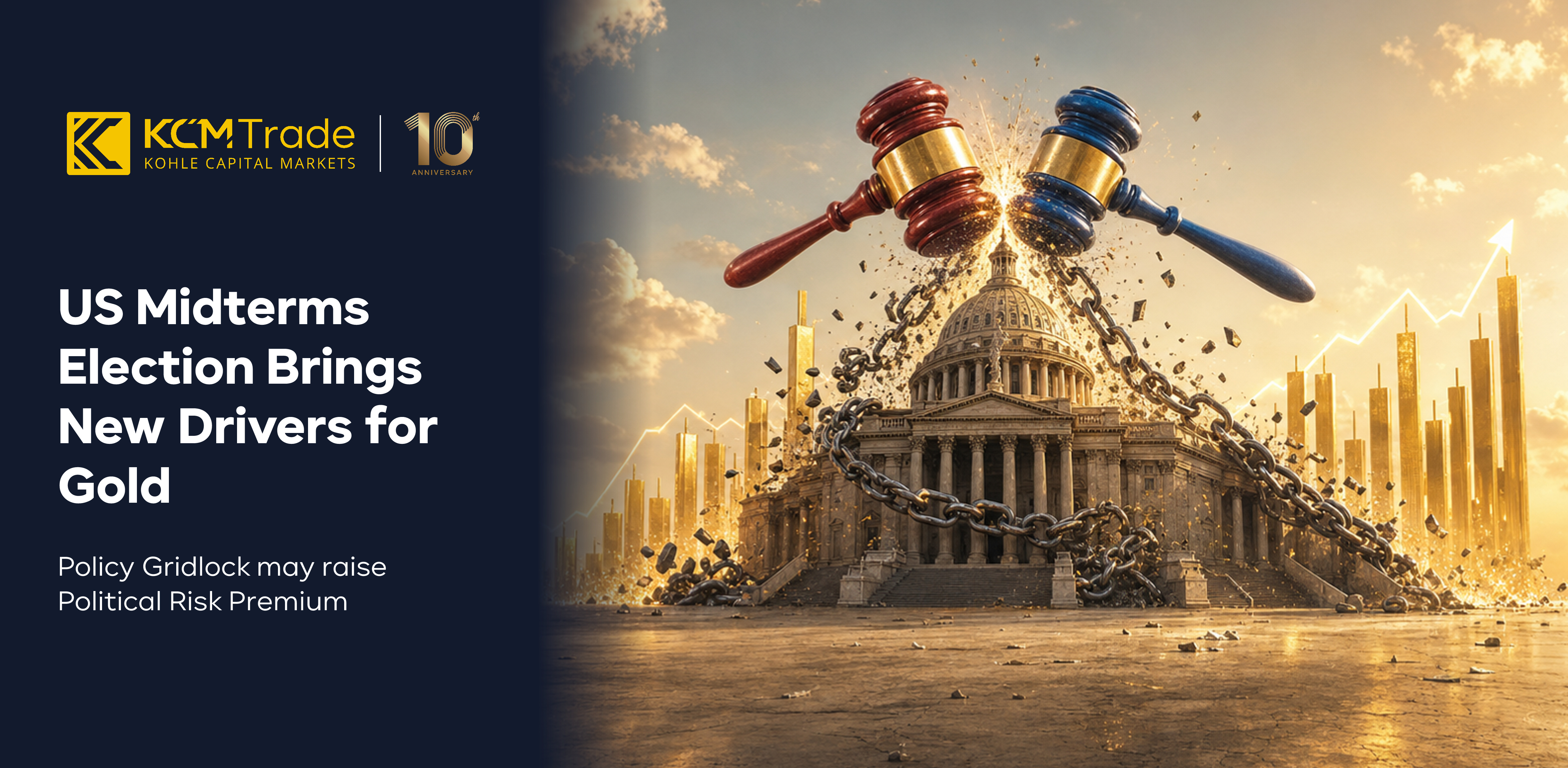
Overall, gold price movement this week is essentially a tug-of-war between digesting short-term bearish factors and pricing in medium-term uncertainties. Pulling back oil prices and dip-buying provided bottom support for gold, but the shadow of a Fed December rate hike still hangs overhead, limiting the bullish offensive. Meanwhile, the approach of the midterm elections is injecting a new layer of variables into the market: if the election results lead to fiscal restraint and policy gridlock, there is a higher probability that gold will gain trend support post-election; if the ruling party scores an unexpected sweep, a short-term resurgence in risk appetite could briefly suppress gold price. For traders, the significance of the $4,000 mark as a dividing line between bulls and bears may be difficult to effectively break through before the election results become clear. Short-term resistance levels for gold can be referenced at $4,100–$4,190, with support sitting at $4,020–$3,960.
(Some visual images were created with the assistance of AI technology and are for illustrative purposes only.)