

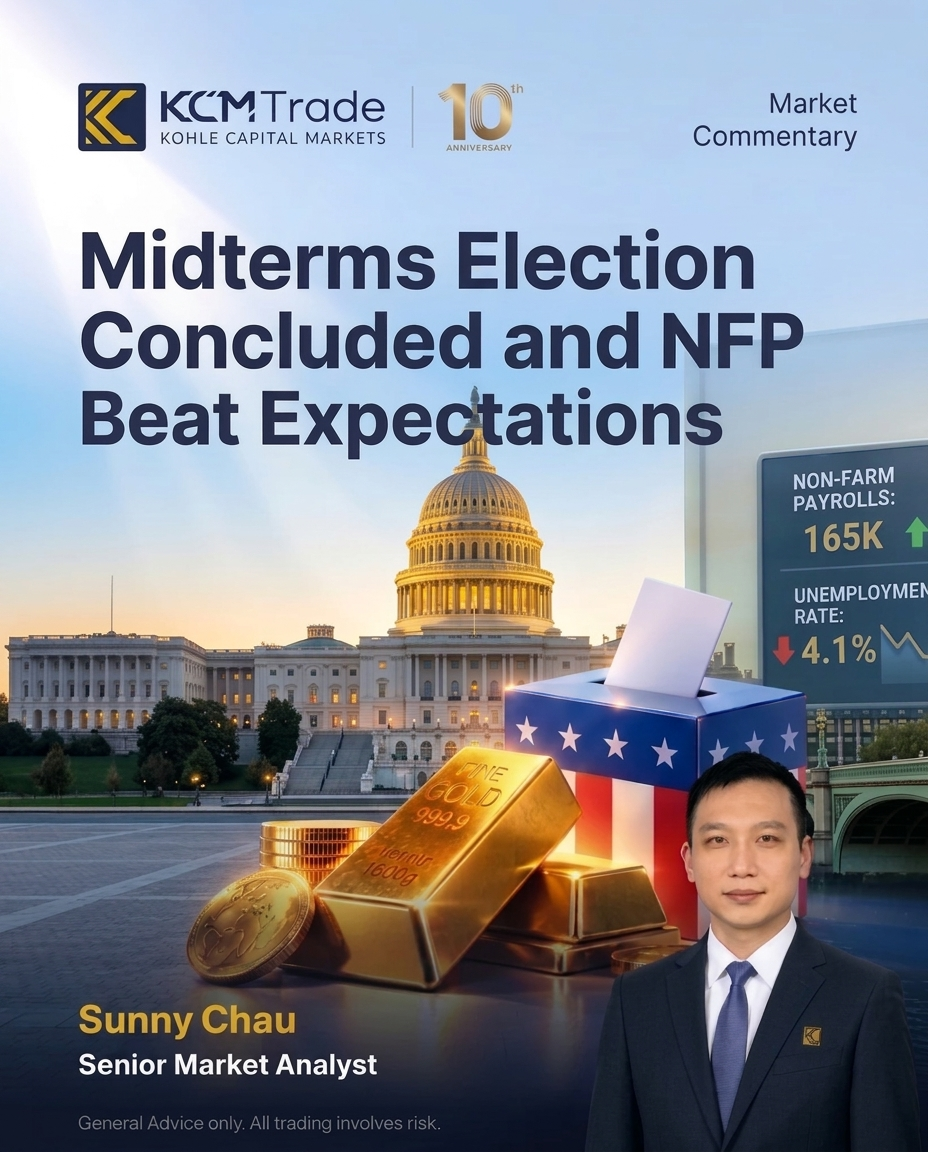
Midterms Election Concluded and NFP Beat Expectations
Last week, the results of the U.S. midterm elections were finalized, with the Democratic Party regaining control of both the Senate and the House of Representatives. Market participants expressed concerns regarding the potential for stricter approval processes and policy shifts affecting the construction of AI data centers. Furthermore, anxieties surrounding the return-on-investment timeline for massive capital expenditures in the AI sector—coupled with questions about the financing environment—triggered a wave of liquidations in "crowded" trades. The Nasdaq index fell 3.4% for the week, as capital clearly flowed out of technology stocks, particularly those linked to AI and semiconductors.

In addition to the midterm elections, another critical data point released last week was the U.S. non-farm payrolls report for October. The figures significantly outperformed expectations: the economy added 165,000 jobs, far exceeding the market forecast of 65,000 and surpassing the 12-month average monthly gain of 48,000. The unemployment rate fell to 4.1%, coming in below the projected 4.2%. Wage growth also slightly exceeded expectations, with average hourly earnings rising 3.1% year-on-year and 0.4% month-on-month—an indication that the labor market remains resilient and wage-related inflationary pressures persist. These data points reinforced expectations for a Federal Reserve rate hike in December, with the market-implied probability of a hike of at least 25 basis points climbing to approximately 80% at one stage. Following the release, the U.S. Dollar Index surged 0.7%, reclaiming the 102 level and marking its largest single-day gain in five months.
The gold market experienced a striking rally last week. Spot gold climbed from around $3,880 at the start of the week to reach a weekly high of $4,147 on Thursday, posting a gain of approximately 5% for the week. The primary catalyst for this surge was the midterm election outcome. As the Democratic Party secured control of both chambers of Congress, the market quickly priced in the prospect of shifts in fiscal policy and potential cuts to federal spending. Consequently, both the U.S. dollar and Treasury yields weakened, paving the way for a rebound in gold price. However, the potential downward pressure on gold price has not been entirely eliminated. Key headwinds include growing expectations for a Federal Reserve rate hike in December, the risk of a liquidity squeeze triggered by a sharp sell-off in U.S. technology stocks, and potential shifts in the geopolitical and energy landscape. In the short term, gold faces resistance in the $4,200–$4,250 range, with support levels situated between $4,060 and $4,000.

As for crude oil, the market underwent a dramatic repricing last week. WTI crude plummeted from a high near $105 at the end of October to a low of approximately $86.65, while Brent crude tumbled from around $117.42 to roughly $93.39—a weekly decline of over 12%. The catalyst for this plunge was the midterm elections; following the Democratic Party's victory in both chambers of Congress, the market quickly priced in the prospect of a "political stalemate." This, in turn, suggested that the Trump administration might seek to ease tensions with Iran, thereby reducing the risk of supply disruptions in the Middle East. Simultaneously, fundamental indicators have weakened: spot premiums for Middle Eastern crude have retreated to pre-conflict levels, and Saudi Aramco has lowered the official selling price (OSP) for its Arab Light crude destined for Asian customers by $2 per barrel—the lowest level since May 2020. Nevertheless, the probability of the U.S. resuming military action against Iran following the midterm elections remains high. Notably, President Trump’s remarks on Friday—stating that a decision would soon be made on whether to pursue a peace agreement or "destroy the remaining forces of Iran"—underscore the very real possibility of such a scenario. For Brent crude, short-term resistance lies in the $103–$104.7 range, with support found between $92 and $89.
Looking ahead to this week, the primary focus will be on the U.S. Consumer Price Index (CPI) data for October, due on Tuesday, alongside key earnings reports from the AI sector. The October CPI report serves as the final critical inflation data point ahead of the Federal Reserve’s December policy meeting. The market is currently pricing in an 80% probability of a rate hike in December; a stronger-than-expected CPI reading could further compress the valuations of tech growth stocks and weigh on gold price. AI cloud provider CoreWeave is set to report its third-quarter earnings after the market closes on Tuesday. Traders are less focused on revenue growth and more concerned about the financing risks and debt burden stemming from the company’s aggressive infrastructure expansion. Meanwhile, rumors suggest that Anthropic could launch its IPO roadshow as early as this week—with its valuation range reportedly adjusted downward—an event that will likely influence sentiment regarding the pricing of AI assets in the primary market.
(Some visual images were created with the assistance of AI technology and are for illustrative purposes only.)