



WeChat Pay is the mobile payment function built into WeChat, the all-in-one chat, social media, and payment app created by Chinese technology giant Tencent. It facilitates safe mobile payments and money transfers, and for forex traders it matters because most brokers accept it for near-instant deposits and withdrawals. This article covers what WeChat Pay is, how it works, how to set it up, and how traders — including those outside China — can use it to fund a trading account.
Key Takeaways
- WeChat Pay is the payment feature within WeChat, an app created by Tencent in 2011 that has grown to over a billion active users.
- It is secured through modern encryption, multi-factor authentication (passwords, fingerprints, face recognition), and fraud-monitoring systems.
- Most forex brokers accept WeChat Pay, and deposits/withdrawals are almost instantaneous.
- Foreigners can use WeChat Pay by linking an international Visa, MasterCard, or JCB card — a Chinese bank account is not required.
- The main risks are data privacy concerns, limited functionality outside China, and possible cross-border transaction fees.
What Is WeChat Pay?
Definition of WeChat Pay
WeChat Pay is the payment app built into WeChat, Tencent's chat, social media, and mobile payment platform. Since WeChat's founding in 2011, the app has gained over a billion active users, making it one of the most widely used apps worldwide. Among WeChat's many features, its payment function is particularly popular, facilitating safe mobile payments and money transfers.
Key Characteristics of WeChat Pay
WeChat Pay is widely used in forex trading because it lets traders make deposits and withdrawals quickly through the app. Most brokers accept it, and payments are almost instantaneous. It is also accessible outside China — originally designed for Chinese tourists, it's now useful for foreign students and expats — though not every merchant or service supports it, so it's worth checking for the WeChat Pay symbol first. Costs can also vary depending on the client's residency and card issuer.
How Does WeChat Pay Work?
How WeChat Pay Works for Forex Deposits and Withdrawals
To use WeChat Pay for a forex transaction, traders log into their trading account, select WeChat Pay, and enter the amount they want to deposit or withdraw. For withdrawals, funds appear in the trader's WeChat Pay wallet once the broker processes the request.
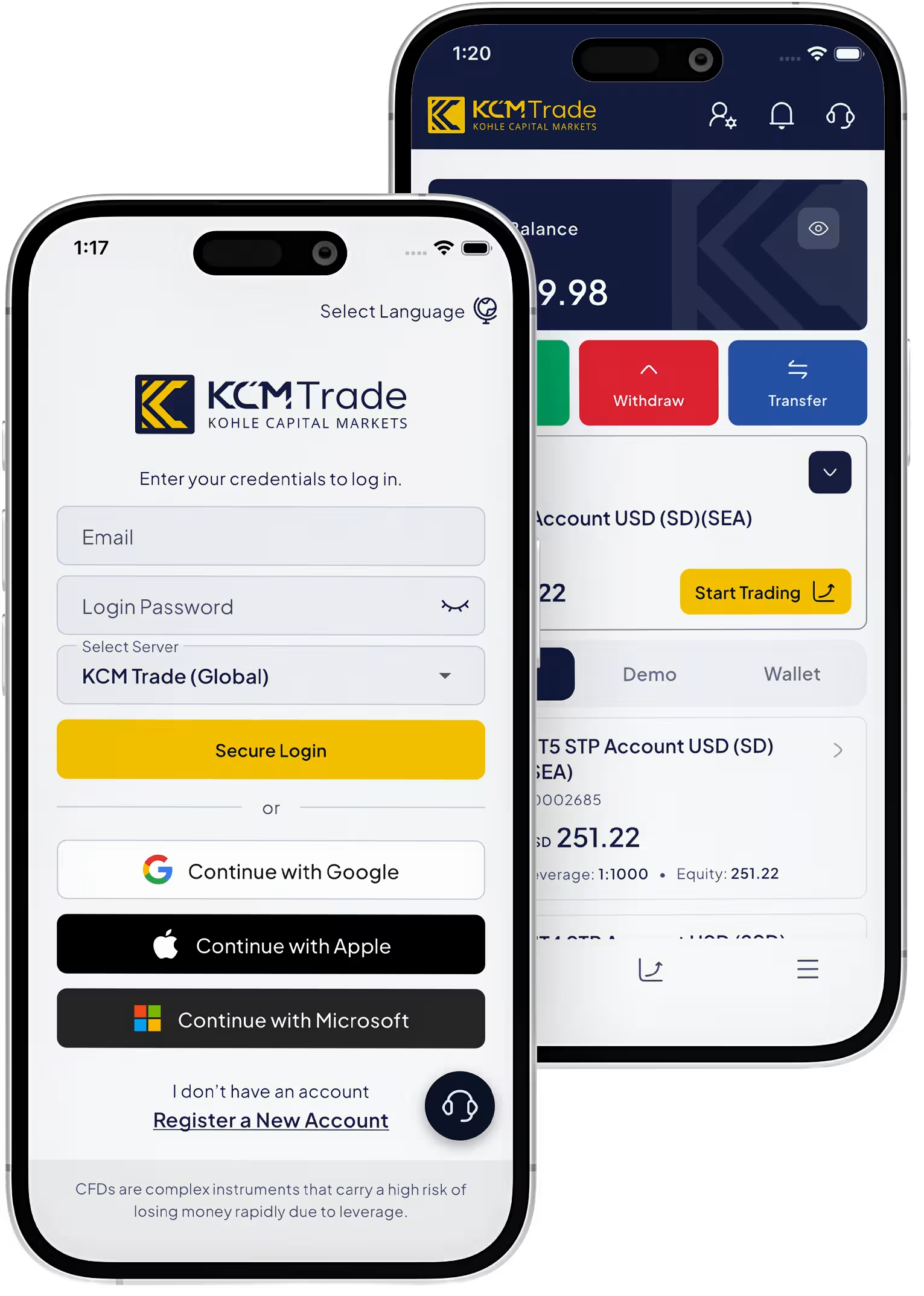
Example: Depositing via WeChat Pay With KCM Trade
As a concrete example of the process, here's how a deposit works through KCM Trade's CRM area:
- Select WeChat Pay from the Deposit section of your CRM area.
- Choose the trading account you would like to top up and the deposit amount, then click Continue.
- Review the transaction summary presented, then click Continue.
- Enter your full name and phone number, then click Next.
- Scan the displayed QR code using the WeChat Pay mobile app and enter the amount to be deposited. The QR code is only valid for 15 minutes.
- Enter your WeChat password in the WeChat Pay mobile app to confirm and finalize the deposit.
- The deposit is complete, and funds should reflect in the chosen trading account soon.
How to Set Up WeChat Pay
Setting up a WeChat Pay account involves a few straightforward steps:
- Install WeChat on your device by finding it in the App Store.
- Create a WeChat account using your phone number.
- Access WeChat Pay by selecting "WeChat Pay" or "Wallet" within the app, activating the wallet if it's your first time.
- Add a payment method by entering card details — name, card number, expiration date, and related information — which the system will then verify.
- Set a password, typically a six-digit combination, used to authorize future transactions.
- Link a bank account, an option especially convenient for residents of China.
Key Features of WeChat Pay
- Instant deposits and withdrawals for forex trading, processed through the broker once the trader selects WeChat Pay and enters an amount.
- Support for international cards — Visa, MasterCard, and JCB — allowing use without a Chinese bank account.
- Multiple transfer options, including instant transfers to another user via WeChat ID or phone number, digital red envelopes (hongbao), direct transfers to linked bank accounts, QR code transfers, bill splitting among friends, and cross-border transfers where available.
- Security features, including encryption, multi-factor authentication, fraud-detection monitoring, login notifications, and device management.
Benefits of WeChat Pay
- Speed: Payments through WeChat Pay are almost instantaneous, which suits the time-sensitive nature of funding or withdrawing from a trading account.
- Broad broker acceptance: Most forex brokers accept WeChat Pay as a deposit and withdrawal method.
- Accessible to non-Chinese users: Foreigners can bind an international debit or credit card to their WeChat account, so a Chinese bank account isn't required — a particular benefit for foreign students and expats.
- Integrated platform: WeChat combines messaging, social media, and payment services in one app, and offers various programs from shopping to booking to financial transfers.
- Strong security measures: Enhanced encryption, multi-factor authentication (password, fingerprint, or face recognition), regular security updates, and fraud-detection algorithms all help protect users' data and transactions.
- International support: WeChat offers support for numerous languages and foreign payment methods, serving a worldwide user base.
Risks and Limitations of WeChat Pay
- Data privacy concerns: WeChat Pay has faced criticism over data privacy practices, particularly regarding the monitoring and sharing of users' data with authorities in China.
- Limited functionality outside China: While WeChat leads in China, its features are considerably limited in other countries, reducing its usefulness for international users. Foreigners may also not be able to access some features available to users with Chinese bank accounts.
- Possible fees: There may be extra fees connected with transactions, particularly cross-border ones, and costs can vary based on the client's residency and card issuer — so this is worth checking before transacting.
- Uneven merchant support: Not every shop or service supports WeChat Pay, so users should check for the WeChat Pay symbol before assuming it will work.
Is It Possible to Use WeChat Pay Without a Chinese Bank Account?
Yes. WeChat Pay allows users to bind international credit or debit cards — such as Visa, MasterCard, and JCB — to their WeChat account, letting them pay or transact without a bank account in China. This is especially beneficial for foreigners, expatriates, and international students who cannot use Chinese banking services. However, foreigners may not be able to access some features available to users with linked Chinese bank accounts.
The WeChat Payment System User Service Agreement
Using WeChat Pay means agreeing to the WeChat Payment System User Service Agreement, which sets out the terms and conditions of use. This includes eligibility requirements — users must be over 18 and comply with local laws and regulations — along with registration on WeChat, identity verification, and linking a valid payment method. The agreement also covers the scope of services (payments, fund transfers, and transaction limits), users' responsibility to keep their accounts secure and provide accurate information, restrictions on prohibited activities, privacy and data protection policies, dispute resolution processes, and termination procedures. Users are informed of any amendments, and the agreement is updated in line with local laws.
FAQs
How Do Foreigners Use WeChat Pay for Deposits and Withdrawals?
Foreigners connect an international debit or credit card — Visa, MasterCard, or JCB are supported — to their WeChat account. After downloading and registering with WeChat, the next step is adding the card details and binding the card to the app. The card can then be used for a range of purposes, including receiving WeChat money transfers for forex deposits and withdrawals.
Is WeChat Pay Safe for Trading Transactions?
WeChat Pay is considered safe, as it's secured by modern encryption and biometric authentication. More broadly, WeChat enforces enhanced encryption for transmitting personal and financial information, multi-factor authentication (passwords, fingerprints, or face recognition), regular security updates, algorithm-based fraud monitoring, and account protection features like login notifications and device management.
How Do I Transfer Money From China to Thailand via WeChat Pay?
Both the sender and recipient need WeChat Pay accounts. The recipient must tie their WeChat Pay to a Thai bank card, and the sender must bind their Chinese bank card to WeChat Pay. The sender then selects "Transfer" in the app, enters the recipient's information and the amount to send. It's advisable to check conversion rates and other applicable costs before completing the transfer.
What Fees Are Associated With Using WeChat Pay?
The source notes that there might be extra fees connected with transactions, particularly cross-border ones, and that costs can differ based on the client's residency and the issuer of the linked card. [GAP: the original content does not specify exact fee amounts or a fee schedule for forex deposits/withdrawals via WeChat Pay.]
Conclusion
WeChat Pay is the payment function within Tencent's WeChat app, and for forex traders it offers a fast, widely accepted way to deposit and withdraw funds — supported even for users without a Chinese bank account through linked international cards. Its speed, broker acceptance, and layered security measures make it a practical funding option, but traders should weigh this against its data privacy criticisms, limited functionality outside China, and potential cross-border fees before relying on it as a primary payment method.